I wrote this article in the Summer of 2016, when I starter to learn Revit, in Delhi.
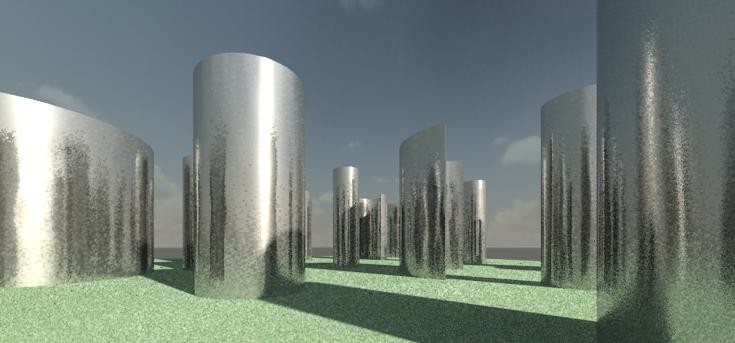
It took 10 minutes to make the cylinders, put the materials, set the camera and get a rendered view. I know an experienced hand would have done it in much less time and with better results, but I was proud of my new achievement. I sat back in my chair and admired the jpeg image. Proud moment, after hours of learning I had picked up a new architectural software. So I decided to show off and shared it with a few friends for their opinion. What I received mostly was ‘Oh! Cool, what is it?’ ‘Just some conceptual ideation’ I replied. I left my chair a happy man. It was a good day.
But somewhere as the day progressed, I travelled through the city; I kept looking outside the train and kept thinking if I could just put my cylinders at various locations? In some places I felt it possible, in some others it looked like a ludicrous idea. Then it dawned on me, has architectural design become easy?
I am not the first one to ask this question. There have been various debates and often concerned discussion within the architectural fraternity for many years now. But somehow it has remained mostly as discussions as the integration of thought process to design through software has not been achieved at the grassroots level, not in the whole plethora of Architectural schools at least.
Young architecture students are bowled and rolled over by the astounding forms and features of buildings designed by eminent international architects. The high resolution images of their buildings splashed across internet pages and Architecture magazines are bewildering indeed. However little is usually mentioned about the design process and thought that has gone in developing them. Or is there any?
What this does is mostly put context, reasoning and architectural sensitivity towards a space within a space to take the back seat. Modulation of form to metamorphose conceptual thinking imbibing challenges of a project is a process which demands creativity, care and dedication. It is not something which can be achieved by just deforming and reforming a basic shape. Or can it be?
Throughout my travels I have seen buildings in developed and developing nations and the language of architecture that is defining and redefining the spaces in which they are built. The Avant-Garde or futuristic architecture is the toast of the day. They are often built in isolation, where context is questionable, as landmark buildings but in some way go further in defining the development of structures around them. The aesthetic and functional balance of many such buildings is not completely successful, but then the discussion is not about perfection. Poor subconscious copying or ‘inspiration’ often leads to weak replication which then adversely affects the path of this architectural style and derails the drive generated by such iconic buildings.
Going back to the initial jpeg image, I believe it is merely the beginning of the process of design. For once which was either difficult, impossible for some with limited skills to visualize something or too time taking, latest software bridges that gap. It allows one to see the direction in which the design in moving and cuts down on time. But the time saved by the software must be then invested in working out every bits of a design process to address all aspects of the design challenge. Once the human element of design is gone, Architects won’t need to be humans!
I was once having a conversation with a fellow Architect and friend about a team of Architects from Foster & Partners working with scientists of NASA to develop Artificial Intelligence to enable robots to build houses in Mars on their own. It was a fun topic to talk about as we prophesized how a bunch of intellectuals, high on knowledge and spirit managed to design AI which then made the profession of Architecture obsolete.
 Architecture, Art & Beyond
Leave a comment